What to Wear to a Job Interview in 2026: Complete Guide
Your interview outfit speaks before you do. In 2026, dress codes have shifted dramatically - tech companies lean casual, finance stays formal, and startups expect personality. Here's exactly what to wear for every industry.
By Saad Sellami
Founder, OutfitScore
Published: April 20, 2025
Reading time: 8 minutes
Quick Answer
In 2026, interview dress codes fall into three categories: formal (finance, law, consulting - wear a suit), smart casual (tech, startups, remote roles - wear tailored separates), and creative (fashion, media, design - show personality through statement pieces). Always research the company's culture on LinkedIn or Glassdoor before deciding. When in doubt, go one level more formal than the company's day-to-day dress code.
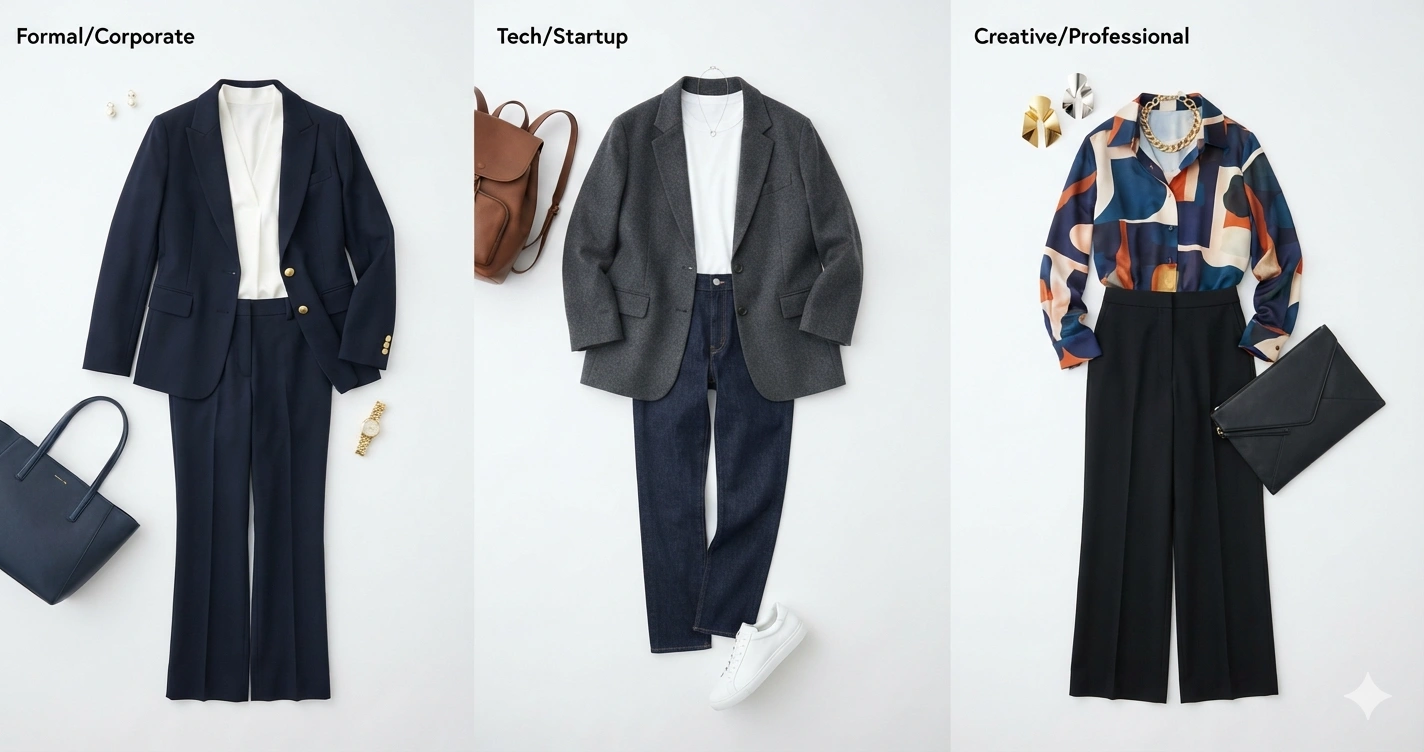
The right interview outfit signals competence, cultural fit, and attention to detail
Interview outfit rules have changed more in the last three years than in the previous thirty. The pandemic, remote work, and Gen Z entering the workforce have reshaped what "professional" means. Hiring managers in 2026 care less about rigid formality and more about whether your outfit shows good judgment for the specific context.
According to a 2025 survey by ResumeBuilder, 71% of hiring managers said they would not hire someone who dressed inappropriately - but "appropriate" now varies wildly by industry. This guide breaks it down.
Dress Codes by Industry (2026 Edition)
Finance, Law, and Consulting
Dress code: Formal / Business Professional
Expected: Tailored suit in navy, charcoal, or black. Closed-toe leather pumps or Oxfords. Minimal jewelry - a watch and small earrings. Bag should be structured leather, not canvas.
2026 update: Some boutique consulting firms now accept smart separates (blazer + trousers) for non-client-facing interviews. But client-facing roles at Big 4 or investment banks still demand full suiting. Women increasingly choose pantsuits over skirt suits, and both are equally accepted.
Tech and SaaS Companies
Dress code: Smart Casual / Elevated Casual
Expected: Dark jeans or chinos (no rips) with a pressed button-down or quality knit sweater. Clean leather sneakers or Chelsea boots. Blazer optional but recommended for senior roles - it shows you made an effort without being stuffy.
2026 update: The "tech uniform" (hoodie + jeans) is fading even at startups. Candidates who dress slightly better than the office average are seen as more serious. At FAANG and unicorns, smart casual is now the norm rather than the exception.
Creative Industries (Fashion, Media, Design, Advertising)
Dress code: Creative Professional / Personal Style Forward
Expected: One bold statement piece paired with clean basics. A designer bag, an architectural blazer, or an interesting silhouette paired with otherwise neutral pieces. Shows you understand aesthetics without looking like you're trying too hard.
2026 update: Authenticity is the keyword. Creative directors want to see your point of view. Research the company's aesthetic beforehand - a minimalist fashion brand expects minimalist candidates, while a streetwear label rewards bold choices.
Remote and Hybrid Roles
Dress code: Camera-Ready Smart Casual
Expected: Solid-colored top (no patterns - they vibrate on camera), clean hair and minimal makeup, neutral background. A blazer or structured jacket over a simple top signals professionalism through the screen.
2026 update: With AI-powered background blur standard, what you wear above the waist matters more than ever. Avoid white shirts (they blow out on camera), green (chroma key issues with virtual backgrounds), and busy jewelry (rattling noises near the mic).
Healthcare, Education, and Government
Dress code: Professional / Conservative
Expected: Tailored separates in conservative colors. Knee-length or longer skirts, closed-toe shoes, covered shoulders. Accessories should be minimal and practical.
2026 update: These industries remain the most conservative. Even as other sectors relax, healthcare and government interviews still expect traditional professional dress. Err on the side of formality here.
5 Interview Outfit Formulas That Always Work
Formula 1: The Classic Power Suit
Navy blazer + matching trousers + white silk shell + black pumps. Works for finance, law, consulting, and any formal setting. The key is fit - the blazer should button without pulling and the trousers should break cleanly at the shoe. Add a simple watch and stud earrings.
Formula 2: The Tech-Ready Separates
Unstructured blazer + cashmere crewneck + dark slim trousers + white leather sneakers. The blazer says professional, the sneakers say culturally aware. Choose a blazer in a subtle texture - herringbone or subtle check - rather than smooth worsted wool, which feels too formal for tech.
Formula 3: The Creative Statement
Wide-leg trousers in an interesting fabric + fitted black turtleneck + architectural necklace + heeled boots. The silhouette shows design awareness, the all-black base keeps it sophisticated, and the necklace is your conversation piece. This works for fashion, design, and advertising roles.
Formula 4: The Camera-Ready Remote Look
Structured blazer in a jewel tone + solid silk shell in a neutral color + pearl or gold stud earrings. The jewel tone (emerald, sapphire, burgundy) pops on camera and signals confidence. Keep hair neat and background clean. Below the waist doesn't matter for remote interviews, but wearing real pants helps you feel mentally prepared.
Formula 5: The Safe Universal
Sheath dress + structured cardigan or blazer + closed-toe block-heel pumps. Works across almost all industries. The dress should be knee-length in navy, charcoal, or burgundy. Block heels are more comfortable than stilettos and convey practical confidence. Add a structured tote and you're interview-ready.
Colors That Project Confidence
Color psychology matters in interviews. Studies show certain colors consistently influence first impressions:
Navy Blue
The number one interview color. Projects authority, trustworthiness, and competence. It's universally flattering and never feels aggressive. Pair with white, cream, or light blue for the most approachable combination.
Charcoal Gray
Second only to navy. Projects sophistication and neutrality. Slightly more formal than navy and excellent for senior-level positions. Pair with blush, white, or light blue to avoid looking too severe.
Burgundy / Deep Red
Projects confidence and assertiveness. Excellent for creative and leadership roles but use as an accent (blouse, scarf, bag) rather than a full suit, which can feel confrontational. A burgundy blazer over black trousers is a power move.
Colors to Avoid
Bright orange or yellow: Too casual and distracting. All black: Can look severe or funereal outside of creative industries. Neon anything: Draws attention for the wrong reasons. All white: Impractical and can blend with backgrounds on camera.
3 Things Never to Wear to an Interview
1. Anything You Haven't Worn Before
New shoes that pinch, a blazer where you can't lift your arms, or pants that need constant adjusting - these distractions show in your body language. Wear your interview outfit for a full day at least once before the actual interview. You should feel like yourself, not like you're wearing a costume.
2. Strong Fragrance or Heavy Jewelry
A 2025 study by the Society for Human Resource Management found that 31% of hiring managers consider strong perfume or cologne a negative factor. Many offices are fragrance-free. For jewelry: one statement piece max. No jangling bracelets (distracting noise), no oversized earrings (they pull attention from your face).
3. Casual Shoes - Even in Casual Industries
Flip-flops, worn-out sneakers, or anything you'd wear to the gym sends a message that you don't take the opportunity seriously. Even at the most casual startup, clean leather sneakers or polished loafers are the minimum. Shoes are the first thing people unconsciously notice - invest in one pair of interview-only shoes.
Check Your Interview Outfit Before You Go
Not sure if your interview look hits the right note? Upload a photo and our AI analyzes your outfit for professionalism, color balance, and industry appropriateness. Get a confidence score in seconds.
Score My Interview OutfitAbout the Author: Saad Sellami
Saad is the Founder and Lead Data Analyst at OutfitScore. With a background in software engineering, he analyzes tens of thousands of AI fashion assessments to uncover data-driven insights into how we dress, color theory, and styling patterns. Read more about the OutfitScore mission