What to Wear to a Wedding: A Complete Guest Attire Guide for 2026
From black tie to beach casual, decoding wedding dress codes can be stressful. Our guide will ensure you're the best-dressed guest at any ceremony.
Saad Sellami
Founder & Data Analyst, OutfitScore
Published: January 26, 2025
Reading time: 7 minutes
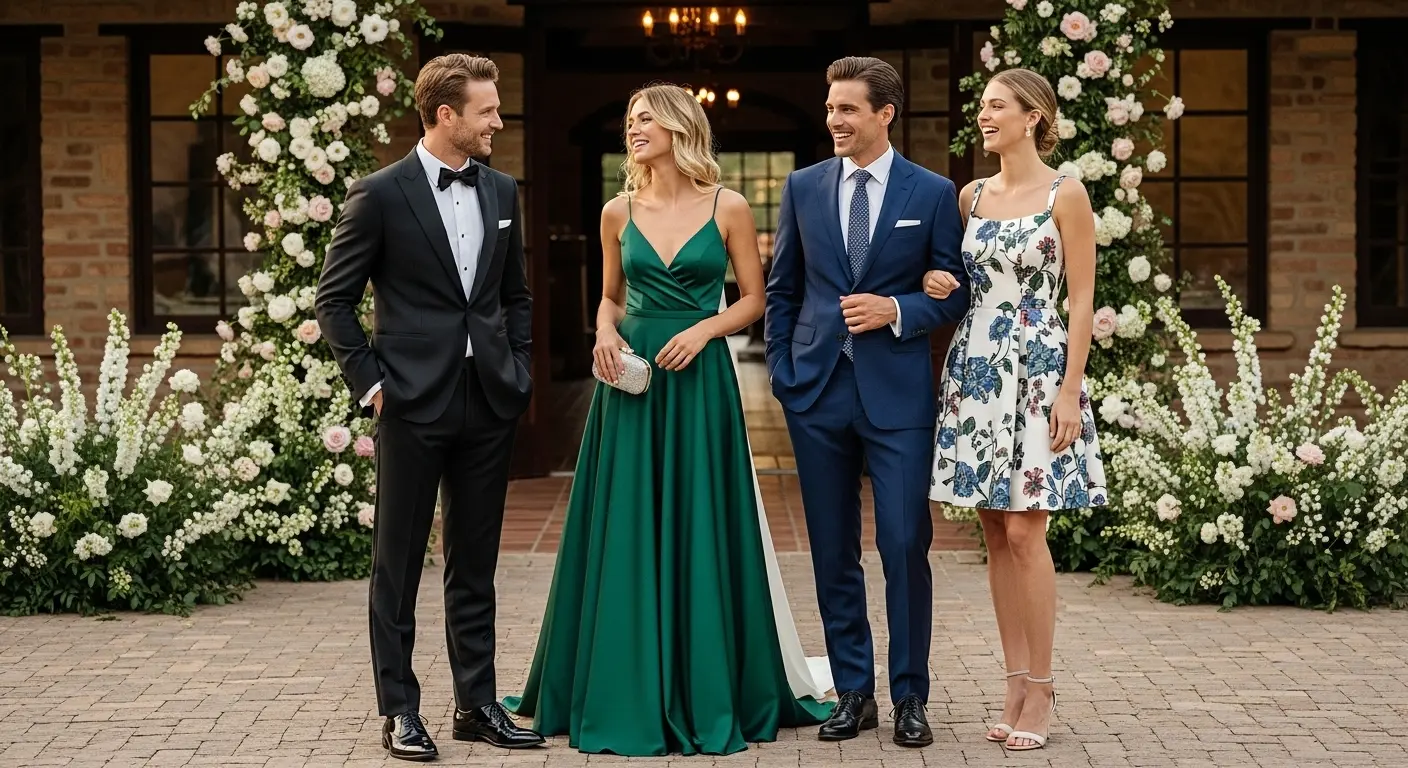
Celebrate in style by mastering the art of wedding guest attire.
Receiving a wedding invitation is exciting, but the "dress code" section can often cause confusion. This guide will break down the most common wedding dress codes so you can choose the perfect outfit with confidence and respect for the happy couple. If you already have an outfit in mind, you can use our AI to check your wedding guest outfit score instantly.
The #1 Rule of Wedding Guest Attire
Unless specifically requested, do not wear white, ivory, or any shade close to it. Let the bride have her moment!
Decoding the Dress Codes
Black Tie
This is the most formal dress code. Men should wear a tuxedo. Women should opt for a floor-length evening gown or a very chic formal cocktail dress.
Formal / Black Tie Optional
Slightly less rigid than black tie. Men can wear a tuxedo or a dark suit and tie. Women can wear a floor-length gown, a fancy cocktail dress, or a dressy pantsuit.
Cocktail Attire
A popular choice for evening weddings. Men should wear a suit and tie. Women should wear a knee-length, tea-length, or midi cocktail dress.
Semi-Formal / Dressy Casual
This is where it gets tricky. Men should wear a dress shirt and slacks, with a sport coat or blazer being a good addition. Women can wear a dressy skirt and top, a stylish jumpsuit, or a cocktail dress.
Casual / Beach
This suggests a more relaxed atmosphere, but you should still look polished. Men can wear linen pants or khakis with a button-down shirt. Women can opt for a sundress or a stylish maxi dress with wedges or dressy sandals.
Six wedding guest outfits the AI has already scored
Each score below is a real dress code plus the outfit that produced it. The pattern is consistent: the looks that score highest are the ones where the formality of the clothes matches the formality of the invitation.
Black-Tie Emerald Gown
86/100Floor-length emerald gown with minimal jewellery and a metallic clutch. The silhouette, fabric weight, and jewel tone all matched black tie, and the deep green read as celebration without competing with the bride.
Cocktail Midi and Heels
82/100Burgundy satin midi dress with strappy heels and a structured clutch. The midi length hit the cocktail brief precisely, and the single saturated colour kept the look polished for an evening reception.
Garden Formal Floral Midi
78/100Floral print midi with a soft wrap top and block heels. The print was scaled correctly for daytime formality, and block heels handled the lawn without sacrificing elegance.
Semi-Formal City Jumpsuit
75/100Tailored navy jumpsuit with a cropped blazer and pointed flats. It landed exactly on dressy casual — sharp enough for the ceremony, relaxed enough for an afternoon reception.
Beach Sunset Linen Maxi
71/100Coral linen maxi dress with wedge sandals and a woven bag. The breathable linen and warm colour suited the setting, though the fabric creased and held the score just below the top tier.
Ivory Slip Dress
58/100Cream silk slip dress with nude heels. Every individual piece was elegant, but the near-white palette broke the number one rule of wedding guest attire and read as competing with the bride — a reminder that occasion fit can override quality every time.
The gap between 86 and 58 here is not about how nice the clothes were. It is about whether the outfit respected the invitation, the venue, and the couple's moment.
Is Your Outfit Appropriate?
Don't guess if you're underdressed (or overdressed). Upload your wedding guest outfit to OutfitScore and our AI will rate it for fit, color harmony, and occasion-appropriateness.
Score My Wedding Outfit (Free)Reading the Venue and Time of Day Before You Choose
The dress code is only half the information
A dress code sets a formality floor, but the venue and the start time set the ceiling. A "cocktail" wedding at 4 p.m. in a garden and a "cocktail" wedding at 8 p.m. in a hotel ballroom call for different outfits even though the invitation uses the same two words. Before you shop through your wardrobe, answer three questions: what time does the ceremony start, is the reception indoors or outdoors, and what will the ground be made of. Those three answers eliminate most wrong choices immediately.
Daytime to evening, decoded
Daytime weddings reward lighter colours, softer fabrics, and restrained sparkle. Evening weddings reward deeper tones, richer textures, and more deliberate jewellery. The transition point is roughly 5 to 6 p.m. An outfit that reads elegant at noon — a pale floral midi, for example — can look washed out under evening lighting, while a jewel-tone satin that sings at night can feel heavy and overdressed at an 11 a.m. ceremony. Match the finish of the outfit to the light it will be photographed in.
Let the venue veto fabrics
Grass, sand, gravel, and historic stone all punish the wrong textile. Silk and satin snag easily and show every crease on uneven ground, heavy wool becomes unbearable in a sunlit garden, and long trains drag through gravel. Match the fabric to the terrain: breathable linen and cotton for beach and garden settings, fluid crepe and satin for ballrooms, and structured wool or velvet only for cool-weather indoor events.
Seasonal Fabrics, Footwear, and the Details
Fabric choices by season
In summer, breathable linen, cotton poplin, and lightweight crepe keep you comfortable through a long ceremony and hours of photographs. In winter, think mid-weight wool, velvet, and heavier satin, and bring a tailored coat or wrap rather than a bulky jacket you will be stuck carrying all night. In spring and autumn, a layered dress or a dress with a light jacket handles the temperature swing between the ceremony and the reception without requiring a full outfit change.
Footwear practicality beats heel height
You will stand, cross uneven ground, and likely dance for several hours, so heel height is a functional decision rather than only an aesthetic one. Block heels and wedges distribute weight and stay stable on grass and gravel, while stilettos sink into both. If you want height for photographs, bring a second pair of flat or low shoes for the reception and leave them in the car or cloakroom. Never debut a pair you have not broken in — a wedding is the worst possible place to discover a blister.
Bags, accessories, and grooming
Keep the bag small and hands-free where possible; a clutch that has to be set down constantly is a nuisance when you are greeting people and holding a drink. Choose one focal accessory — a statement earring, a bold necklace, or a striking clutch — and keep everything else quiet so the outfit reads as deliberate rather than busy. Grooming matters as much as the clothes: clean polished shoes, neat nails, and a fresh haircut or style photograph far better than an expensive outfit with neglected details.
When the invitation is ambiguous
If the invitation gives no dress code, or the code conflicts with the venue, default to the more formal option unless you have reason to believe otherwise, then dress it down with accessories rather than up. You can ask the couple or a member of the wedding party directly — a short, specific question such as "Is the reception indoors, and are most guests wearing long or midi dresses?" is welcome, while a vague "what should I wear?" is much harder to answer. When you truly cannot find out, a midi-length outfit in a solid mid-tone colour with closed-toe shoes sits comfortably between casual and formal and is almost never wrong.
Frequently Asked Questions
What should a wedding guest never wear?
Never wear white, ivory, or any shade close to white unless the couple specifically asks guests to. Those colours are reserved for the bride, and upstaging her is the single biggest styling mistake a guest can make. When in doubt, choose a colour that photographs clearly against the bridal party.
What is the difference between black tie and formal dress codes?
Black tie is the most formal: men wear a tuxedo and women wear a floor-length gown or a very chic formal cocktail dress. Formal or black tie optional is slightly less rigid, so men may wear a tuxedo or a dark suit and tie, and women may wear a floor-length gown, an elevated cocktail dress, or a dressy pantsuit.
What should I wear to a beach or casual wedding?
Aim for polished but relaxed. Men can wear linen trousers or khakis with a button-down shirt, and women can wear a sundress or a stylish maxi dress with wedges or dressy sandals. Skip heavy fabrics, dark formality, and anything that struggles on sand or grass.
Can I wear black to a wedding?
Black is generally acceptable, especially for evening, cocktail, and black tie events. The key is to style it as celebration rather than mourning — add colour through accessories, choose an elegant silhouette, and avoid an all-black look that reads as somber for a daytime or beach ceremony.
How do I score my wedding guest outfit before the event?
Upload a photo of the full outfit to OutfitScore and the AI rates fit, colour harmony, styling cohesion, and occasion-appropriateness against the dress code. That tells you whether the look is underdressed, overdressed, or spot on before you leave the house.