The Ultimate Capsule Wardrobe Guide: Build a Minimalist Closet That Works
Tired of a closet full of clothes with "nothing to wear"? A capsule wardrobe is your solution. Learn how to curate a small, versatile collection of pieces you truly love.
Saad Sellami
Founder & Data Analyst, OutfitScore
Published: January 20, 2025
Reading time: 7 minutes
Quick Answer
A capsule wardrobe is 30–40 versatile, high-quality pieces that all mix and match. Build one by: (1) decluttering everything you haven't worn in 12 months, (2) identifying your most-worn color palette, (3) filling gaps with neutral basics, and (4) keeping one statement piece per category. Quality over quantity is the only rule.
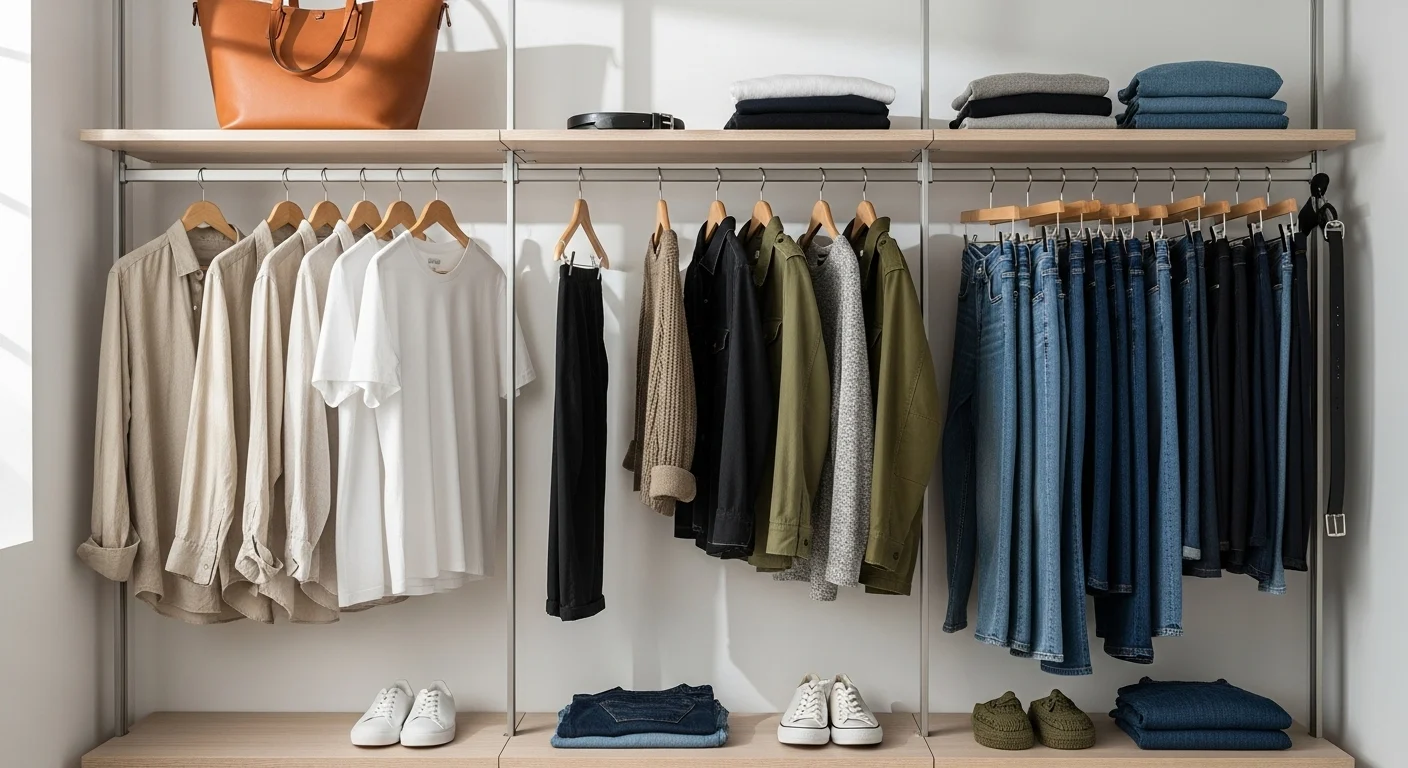
A capsule wardrobe is about quality over quantity, creating endless outfits with fewer pieces.
Imagine opening your closet and seeing only clothes that fit you perfectly, that you love to wear, and that all mix and match effortlessly. That's the power of a capsule wardrobe. It's not about restriction; it's about freedom—freedom from decision fatigue, wasteful spending, and a cluttered closet.
🌟 What is a Capsule Wardrobe?
A capsule wardrobe is a small collection of essential, versatile, high-quality clothing items that you love, which can be mixed and matched to create numerous outfits. It typically consists of 30-40 pieces per season (including tops, bottoms, outerwear, and shoes).
The 4-Step Guide to Building Your Capsule
Ready to transform your closet? Follow these four simple steps.
Step 1: The Great Closet Clean-Out
Take everything out of your closet. Yes, everything. Create four piles:
- Love It & Wear It: These are your potential capsule pieces.
- Maybe: Items you're unsure about. Box these up and store them for 3-6 months. If you don't miss them, donate them.
- Donate/Sell: Anything that doesn't fit, is damaged, or doesn't match your style.
- Seasonal: Heavy winter coats or summer dresses that can be stored away.
Step 2: Define Your Personal Style & Color Palette
Look at your "Love It" pile. What do these items have in common? Are they classic, bohemian, minimalist? Use Pinterest or magazines for inspiration. Then, choose a color palette:
- Base Colors (2-3): Neutrals like black, navy, gray, beige, or white. These will be your core pieces like pants and coats.
- Accent Colors (2-4): These are the colors you love that complement your base colors. Think blues, greens, pinks, or yellows for tops and accessories.
Step 3: Plan Your Capsule Pieces
Aim for around 37 pieces per season. A good starting point is:
- 9 Tops: (T-shirts, blouses, sweaters)
- 5 Bottoms: (Jeans, trousers, skirts)
- 5 Outerwear Pieces: (Jackets, coats, blazers, cardigans)
- 9 Pairs of Shoes: (Sneakers, boots, flats, heels)
- 9 Accessories: (Bags, scarves, belts - jewelry doesn't count toward this number)
Step 4: Shop Smart to Fill the Gaps
Now that you have your list, shop intentionally. Look for high-quality, versatile pieces in your chosen color palette that fill the gaps in your capsule. Prioritize fit and fabric. This is about investment, not impulse.
Sample 30-Piece Fall Capsule Wardrobe
Tops (9)
- • White T-shirt
- • Black T-shirt
- • Striped Long-Sleeve
- • Silk Blouse (Ivory)
- • Chambray Shirt
- • Cashmere Sweater (Camel)
- • Gray Crewneck Sweatshirt
- • Black Turtleneck
- • Plaid Flannel Shirt
Bottoms & Dresses (6)
- • Dark Wash Jeans
- • Black Trousers
- • Faux Leather Leggings
- • A-Line Skirt (Corduroy)
- • Sweater Dress
- • Black Jumpsuit
Outerwear & Shoes (9)
- • Trench Coat
- • Black Leather Jacket
- • Long Cardigan (Gray)
- • Ankle Boots (Black)
- • White Sneakers
- • Loafers (Brown)
- • Knee-High Boots
- • Blazer (Plaid)
- • Rain Boots
Six capsule wardrobe outfits the AI has already scored
Every combination below is built only from the capsule pieces listed above. The AI scores the whole look across colour harmony, cohesion, and occasion fit — the number changes with the pairing, not the pieces.
Camel cashmere sweater, dark-wash jeans, brown loafers, trench coat
84/100Three neutral base colours plus one warm accent. The trench adds a clean vertical line, and the loafers pick up the sweater's camel tone.
Black turtleneck, black trousers, black ankle boots, black leather jacket
80/100A single-colour column that scores high on cohesion, but stops short of the mid-80s because it offers no contrast or accent to break it up.
Ivory silk blouse, plaid blazer, dark-wash jeans, knee-high boots
76/100The plain ivory blouse keeps the plaid blazer from reading busy, and the dark jeans ground a look that would otherwise skew too formal.
White t-shirt, chambray shirt, faux leather leggings, white sneakers
71/100Relaxed and consistent, but the casual chambray and the sleek leggings disagree on formality, which caps the coordination score.
Gray crewneck sweatshirt, corduroy A-line skirt, rain boots
62/100Comfortable and weather-ready, though the sporty sweatshirt sits awkwardly against the textured A-line skirt and the look loses purpose.
Plaid flannel shirt, black jumpsuit, black ankle boots
56/100Two loud statements in one outfit. The flannel's pattern competes with the jumpsuit instead of supporting it, dragging cohesion down.
Digitize Your New Capsule Wardrobe
Use OutfitScore's Virtual Closet to upload your capsule pieces. Our AI automatically removes backgrounds so you can mix, match, and score endless combinations on our digital canvas.
Open Virtual Closet (Free)Fabric Weights: Why Your Capsule Pieces Last or Fall Apart
A capsule only pays off if each piece survives hundreds of wears. Fabric weight, measured in grams per square metre (GSM), is the single best predictor of how a garment drapes, layers, and holds up in the wash. Buying "mid-weight" versions of your basics is the difference between a piece that lasts three seasons and one that pills by Christmas.
Target weights for core pieces
- T-shirts and light tops: 180-220 GSM cotton. Under 150 GSM turns sheer and loses its neckline; over 240 GSM stops layering cleanly under a blazer or cardigan.
- Merino and cashmere sweaters: 300-400 GSM. Dense enough to resist pilling yet fine enough to wear under outerwear without bulk.
- Denim: 11-14 oz. Lighter denim stretches out and bags at the knees; heavier raw denim takes months to break in and is a poor choice for a piece you wear twice a week.
- Coats and blazers: 500-700 GSM wool coating. Below 500 GSM the coat will not block wind, which defeats the point in fall and winter.
The pinch test when there is no spec sheet
Most brands do not publish GSM. Pinch a single layer of the fabric between your thumb and forefinger: if you can see your fingers through it, it is too light for a workhorse basic. Then scrunch the fabric in your fist and release. A good mid-weight knit springs back with few creases; a cheap blend stays crumpled, which is how it will look after two hours of wear.
Cost Per Wear: The Math That Justifies Fewer, Better Pieces
The sticker price is the least useful number on a garment. Cost per wear divides the price by the realistic number of times you will wear the piece before it wears out, and it usually flips the ranking of cheap and expensive.
- A $40 printed top worn 12 times before it fades costs $3.33 per wear.
- A $120 merino crewneck worn twice a week through a 20-week cold season for three years costs about $1.00 per wear.
- A $200 trench worn 60 times a year for five years costs $0.67 per wear.
The 30-wear rule
Run the calculation before every capsule purchase. If you cannot picture wearing the piece at least 30 times, it is a one-off, not a capsule piece. That single test prevents most of the impulse buys that refill a closet you just cleaned out.
Laundry and repair keep the math working
Cost per wear collapses if a piece is ruined by careless washing. Air knitwear between wears instead of washing it, wash denim inside out in cold water after roughly ten wears, and dry wool flat rather than on a hanger. Learn three repairs: re-sew a button, darn a small moth hole, and replace a worn insole. A $3 repair extends a $120 piece by a season, the cheapest cost-per-wear improvement available.
Seasonal swaps without rebuilding the capsule
Keep roughly 70% of your pieces year-round (jeans, neutral tees, blazers, loafers, the watch) and rotate only the remaining 30% for the season. In fall and winter, trade linen and shorts for the trench, leather jacket, boots, and heavier knits; in spring and summer, reverse it. Store the swapped-out pieces clean and folded rather than on hangers, with a cedar block or lavender sachet to deter moths, and re-check the box at each changeover: anything you did not miss is a candidate to donate, which stops the capsule quietly growing back.
Frequently Asked Questions
How many pieces should a capsule wardrobe have?
Most capsules run 30-40 pieces per season, and the sample plan in this guide uses about 37: 9 tops, 5 bottoms, 5 outerwear pieces, 9 pairs of shoes, and 9 accessories. Jewelry is not counted toward that total.
What is the first step in building a capsule wardrobe?
The closet clean-out. Take everything out and sort it into four piles - Love It & Wear It, Maybe, Donate/Sell, and Seasonal - then box the Maybe pile and store it for 3-6 months before deciding. If you never miss an item, it does not belong in the capsule.
What color palette should a capsule wardrobe use?
Choose 2-3 base neutrals such as black, navy, gray, beige, or white for core pieces like pants and coats, plus 2-4 accent colors you love that complement those neutrals for tops and accessories. Sticking to one palette is what lets the pieces mix and match.
How do I fill the gaps in my capsule wardrobe?
After the clean-out and color palette are set, list the missing pieces and shop intentionally for high-quality, versatile items in your chosen colors. Prioritize fit and fabric and treat the purchase as an investment rather than an impulse buy.
Can OutfitScore score combinations from my capsule wardrobe?
Yes. OutfitScore's Virtual Closet lets you upload your capsule pieces, automatically removes their backgrounds, and then lets you mix, match, and score the resulting combinations on a digital canvas.
About the Author: Saad Sellami
Saad is the Founder and Lead Data Analyst at OutfitScore. With a background in software engineering, he analyzes tens of thousands of AI fashion assessments to uncover data-driven insights into how we dress, color theory, and styling patterns. Read more about the OutfitScore mission →