Quiet Luxury Guide: How to Dress It Without Logos
Quiet luxury is not beige. It is the decision that fabric, cut and the absence of a logo are the whole point. This guide is the long version of that rule — what to buy, what to skip, and how it differs from old money.
By Saad Sellami
Founder, OutfitScore
Published: September 22, 2026
Reading time: 12 minutes
Quick Answer
Buy natural fibre in a muted palette, get the shoulder and hem altered, and remove every visible brand mark. Old money still wears gold hardware and navy blazers; quiet luxury does not. Three pieces change the wardrobe: a no-hardware bag, a wool trouser with a clean drape, and one excellent knit. If a piece pills, shines, or announces itself, it is not this aesthetic.
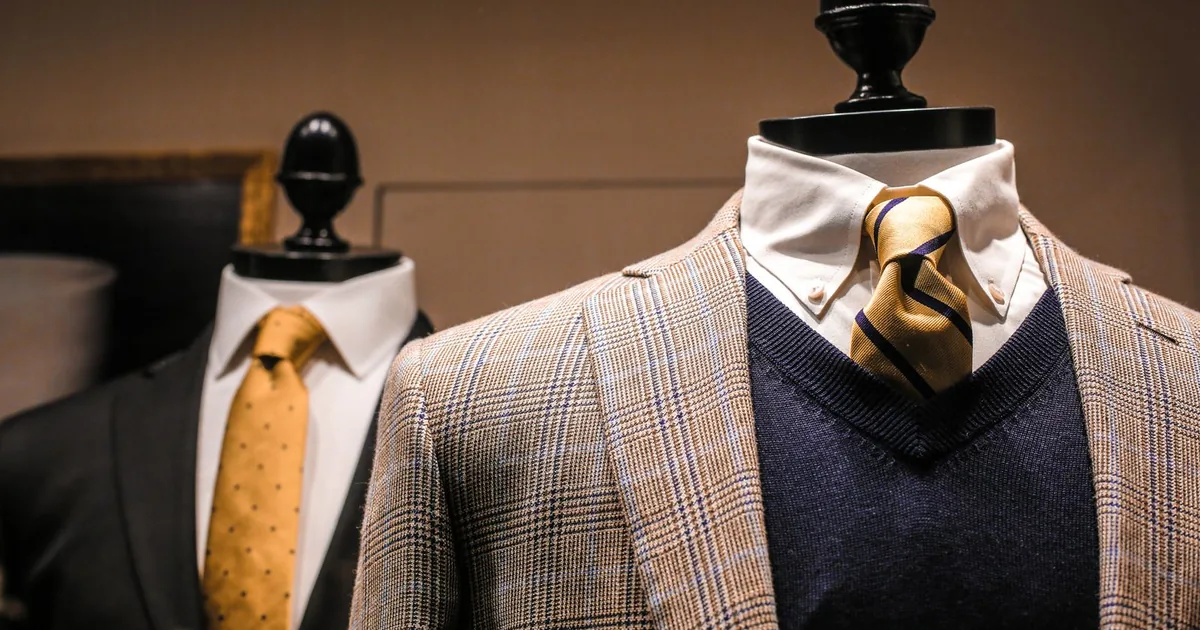
Quiet luxury reads in drape and fibre, not in a logo or a trend name
Advertisement
The phrase got tired because it was used as a shopping list: beige jumper, beige coat, beige trousers, done. That is a colour story, not an aesthetic. Quiet luxury is a restraint rule. The clothes should look as if they cost more than they advertise, and they should still look like clothes — not like a set from a hotel lobby.
If you already took the aesthetic quiz and landed on Quiet Luxury, this is the operating manual. If you landed on Old Money, stay on that page of the quiz and use this guide only for the overlap: fibre and fit. The two looks share a closet wall and fight if you mix their signifiers.
Quiet luxury versus old money
Treat them as cousins, not twins. Old money wants you to recognise the codes: navy, camel, burgundy, gold, a blazer that sits on the shoulder bone, leather loafers. Quiet luxury wants you to notice nothing except that the person looks finished. The hardware goes. The crest goes. The contrast stitching goes.
Old money still shows
Gold buttons, a visible watch, a structured shoulder, a penny loafer with a tassel. Heritage is the language. Price is allowed to be guessed.
Quiet luxury hides
No hardware on the bag, no contrast logo, a dropped or natural shoulder, a matte leather flat. Fabric is the language. Price should be unguessable from a distance.
The mix that fails: a logo-free cashmere crewneck with a monogrammed belt. The belt undoes the knit. Keep one language per outfit. If you want both aesthetics in one wardrobe, alternate days — do not stack them on the same body.
Advertisement
The fabric test that actually works
Hold the cloth. If it springs back slowly, has weight, and does not throw a plastic shine under shop lighting, it is a candidate. Wool, cashmere, merino, heavy cotton, linen with a slub, and vegetable-tanned leather are the default. Viscose that pretends to be silk, acrylic that pretends to be cashmere, and coated canvas that pretends to be leather are the usual misses.
Pilling is information. A cheap knit pills at the side seam in two wears because the staple is short. A decent merino pills later and less, and the pills brush off. If you cannot afford cashmere, buy merino. If you cannot afford merino, buy a heavier cotton and skip the fake luxury fibre entirely. A honest cotton tee in ivory beats a shiny "cashmere blend" every time.
Leather should dull, not gleam. Patent, metallic, and high-contrast stitching are loud even in black. A bag with no visible logo and no gold zip pull will do more for the look than a "quiet" coat with branded buttons.
The three pieces that change the wardrobe
Do not rebuild. Swap three things, wear them with what you already own for two weeks, then decide.
1. One excellent knit
Crew or funnel, not a giant rollneck unless you have the neck for it. Colour: stone, taupe, charcoal or a muted olive. It should skim, not cling and not balloon. If it grows after a wash, the knit is too loose — return it.
2. Wool trousers with a clean drape
Wide or straight, not skinny. The hem should kiss the shoe, not puddle. This is the piece people cheap out on, and it is the piece the camera notices. Have the hem done. A $20 alteration beats a $200 trouser that is 4 cm too long.
3. A bag with no hardware
Unlined or lightly structured, in a leather that matches your shoes rather than fighting them. If the zip pull is a hanging disc with a letter on it, it is not this bag.
Shoes next, not first. A minimal leather flat or loafer without a bit or a tassel. White trainers can sit in a quiet-luxury outfit if they are unscuffed and the rest of the look is wool; they cannot rescue a polyester set.
Palette: muted, not beige-only
Beige-on-beige fails when the undertones clash. Warm skin wants cream, camel and olive. Cool skin wants ivory, stone-grey and ink. Neutral skin can mix, but should keep saturation low. If camel makes you look sallow, you are probably cool — confirm with the undertone test and then the color season analyzer if you want the full 12-season map.
Black as a head-to-toe column is graphic, not quiet. Use it as a trouser or a shoe, not as the entire outfit, unless your contrast is high enough that black is actually your neutral. Most people who copy a "quiet luxury black row" from a street-style photo are wearing a different colouring than the person in the photo.
One muted colour is allowed: a dusty sage, a grey-blue, a browned burgundy. Keep it to one piece. Two accent colours turn the look into a mood board.
Advertisement
Fit rules that matter more than the brand
Shoulder first. The seam should sit on the edge of your shoulder, not halfway down the arm and not climbing up the neck. Quiet luxury with a sloppy shoulder looks like you borrowed a hotel robe. If you are between sizes, size for the shoulder and take in the waist.
Sleeve length: the knit should hit the wrist bone, the coat should cover the knit by a centimetre, not swallow the hand. Trouser break: a slight kiss, no stacking. These three millimetre decisions are what people mean when they say something "looks expensive."
Your body type still decides the cut. Quiet luxury on a pear is a longer jacket and a wider trouser, not a cropped cardi that stops at the widest point. Quiet luxury on an inverted triangle is a softer shoulder, not a sharp blazer that adds more width. Run the body type calculator before you copy a celebrity's exact silhouette.
What to stop buying
- Anything with a contrast logo tape, even inside the collar if it peeks.
- "Quiet luxury" collections that are polyester satin. The name is marketing; the fibre is not.
- Giant gold hoops, charm bracelets, and stacked rings. One thin band or a watch is enough.
- Distressed denim. Texture yes, destruction no.
- Seasonal novelty prints, even if they are "subtle." A small horse or a small logo is still a logo.
- Coated skinny jeans. The shine fights the whole idea.
Grooming is part of the look, which is why clean girl gets confused with this. Clean girl is skin, hair and a white tee. Quiet luxury is cloth. You can have messy hair and still read as quiet luxury if the coat is right. You cannot have a perfect slick bun and a pilling acrylic knit and get there.
A two-week wear test
Put the three new pieces with what you already own. If you reach for a logo hoodie over the knit, the hoodie is the real aesthetic — keep it, and treat quiet luxury as the runner-up, not the baseline. The aesthetic quiz returns a runner-up for this reason. Layer one quiet piece into a louder wardrobe rather than throwing out the louder wardrobe.
Cost per wear still applies. A $400 coat worn 80 times is quieter, and cheaper, than four $80 coats that look loud after a season. That is the only budget argument this aesthetic has. If the maths does not work, wait. A gap in the wardrobe is quieter than a bad fill.
Check the aesthetic, then the colouring
Name the look with the free aesthetic quiz, then lock the neutrals with the undertone test so camel does not wash you out.
Frequently Asked Questions
What is quiet luxury, exactly?
Quiet luxury is dressing so the quality is the only signal. No logo, no hardware flex, no seasonal print. The eye should land on drape, fibre and fit. If a stranger can name the brand from across the room, it is not quiet.
How is quiet luxury different from old money?
They share restraint. Old money still uses heritage cues — navy blazers, gold hardware, loafers, a crest-adjacent palette. Quiet luxury strips those signifiers. The same camel coat in old money has visible buttons and a structured shoulder; in quiet luxury the buttons disappear and the fabric does the talking.
Can I do quiet luxury on a budget?
Yes, if you buy fewer pieces and spend on fibre. One merino crewneck in stone beats four polyester "quiet luxury" dupes that pill in a fortnight. Shop secondhand for wool, cashmere and leather; skip anything with a contrast logo tape even if the cut is clean.
What colours belong in a quiet luxury wardrobe?
Stone, taupe, charcoal, ivory, ink and a muted olive. Not true white (too stark) and not jet black as the whole outfit (too graphic). Your undertone still decides which neutrals sit near your face: cream for warm, ivory-grey for cool. Take the undertone test before you buy a whole rail of camel.
Why do quiet luxury outfits look cheap on some people?
Usually fabric, then fit. A viscose "cashmere" knit with a shiny surface reads as costume. A wool trouser that breaks in a puddle at the shoe reads as borrowed. Alter the hem and the shoulder before you blame the aesthetic.
Is quiet luxury the same as a capsule wardrobe?
No. A capsule is a count and a mixing rule. Quiet luxury is a visual rule: invisible branding, natural fibre, muted palette. You can have a 12-piece capsule that is loud, and a 60-piece wardrobe that is quiet. Build the visual rule first, then cut the count. See the capsule wardrobe guide for the count.
About the Author: Saad Sellami
Saad is the Founder and Lead Data Analyst at OutfitScore. With a background in software engineering, he analyzes tens of thousands of AI fashion assessments to uncover data-driven insights into how we dress, color theory, and styling patterns. Read more about the OutfitScore mission