How to Layer Clothes Without Looking Bulky: Complete Guide
Layering is the difference between a basic outfit and one that looks intentional. When done right, it adds depth, proportion, and warmth without bulk. When done wrong, it adds 15 visual pounds.
By Saad Sellami
Founder, OutfitScore
Published: August 15, 2025
Reading time: 7 minutes
Quick Answer
The golden rule of layering: thinnest fabric closest to your body, thickest furthest away. Master 3 layer types: base (t-shirt, turtleneck, bodysuit), mid (button-down, sweater, vest), and outer (blazer, coat, jacket). Mix textures across layers - smooth with chunky, matte with shiny, structured with fluid. Never layer two bulky fabrics together; always have at least one thin layer in the mix.
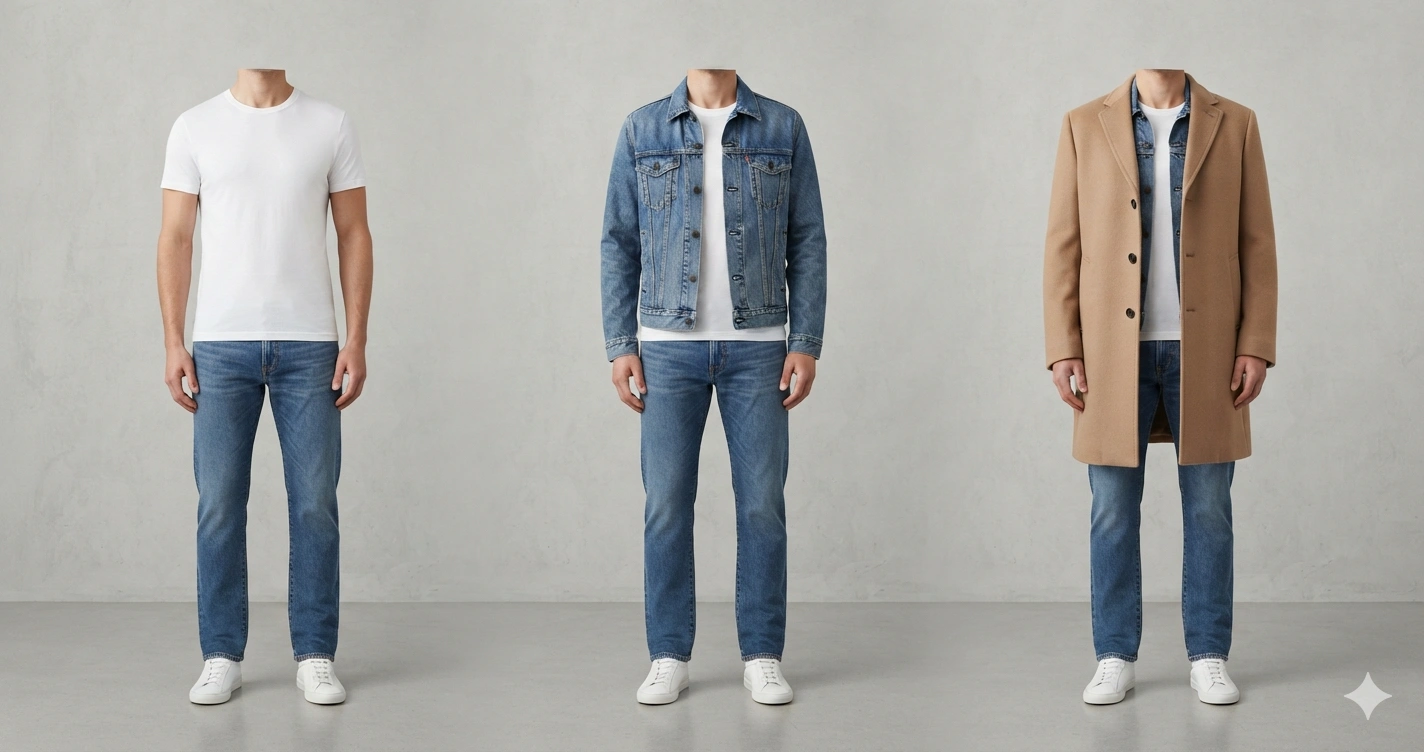
Master the art of layering: thin to thick, light to heavy, smooth to textured
Bad layering is immediately obvious: lumpy silhouettes, fabric bunching at the elbows, the dreaded "onion" look where you can count every layer from the outside. Good layering is invisible - the outfit looks like one cohesive look, not three separate garments stacked on top of each other.
The secret is understanding weight distribution, texture contrast, and the order in which layers are stacked. This guide covers all three.
The Thinnest-to-Thickest Rule
This is the single most important layering concept. Every layer you add should be heavier or thicker than the one beneath it. Violate this rule and you'll look bulky instantly.
Why It Works
Thin fabrics compress easily. When you put a thin layer under a thick one, the thick outer layer smooths out any ripples from the thin inner layer. Reverse the order - a chunky sweater under a thin cardigan - and the chunky fabric bunches and billows under the thin outer layer, creating bulk exactly where you don't want it.
The 3 Layer Types
Every layered outfit has up to three functional layers. Not every outfit needs all three - two-layer outfits are often better for transitional weather. Here's what each layer does:
Layer 1: The Base (Foundation)
Role: The layer that touches your skin. It should be the thinnest, most fitted piece in your outfit.
Examples: Fine-gauge turtleneck, cotton t-shirt, silk camisole, bodysuit, thermal top (in cold weather), tank top
Key rules: Must be fitted - no loose or boxy base layers. If the base is loose, every layer above it will also be loose, and you lose your silhouette entirely. Sleeves should be slim enough to slip under mid-layer sleeves without bunching. The neckline matters: a crew neck base limits you to V-neck or open mid-layers; a V-neck base works with everything.
Layer 2: The Mid-Layer (Interest)
Role: The visible layer that adds texture, pattern, or color. This is where your outfit's personality comes from.
Examples: Button-down shirt (leave collar and cuffs visible), crewneck sweater, cardigan, denim jacket (worn as mid-layer under a coat), sweater vest, hoodie (casual only), flannel shirt
Key rules: This layer should be slightly looser than the base but still fit under your outer layer. If you can't button your blazer over your sweater, the sweater is too thick to be a mid-layer - it should be the outer layer instead. The mid-layer hem should be visible - a sweater that ends at the same spot as your blazer creates a blocky line.
Layer 3: The Outer (Structure)
Role: The final layer that defines your silhouette and handles weather. It should be the thickest, most structured piece.
Examples: Blazer, wool coat, trench coat, leather jacket, puffer vest, oversized cardigan, chore jacket, bomber jacket
Key rules: Must have enough room to fit layers 1 and 2 without pulling at the buttons or restricting arm movement. Size up if necessary - no one sees the tag, but everyone sees a coat that doesn't close. The outer layer's length determines the outfit's vertical proportion: a cropped outer layer shortens the silhouette; a knee-length outer layer elongates it.
Texture Mixing Guide
Layering isn't just about warmth - it's about creating visual depth. The best layered outfits mix at least two contrasting textures across their layers:
Smooth + Textured
Silk base + cable knit mid-layer + smooth wool coat. The chunky knit provides interest, the smooth pieces keep it looking intentional.
Matte + Shiny
Cotton base + suede mid-layer or leather jacket + matte wool coat. The shine of leather or patent against matte wool adds sophistication.
Soft + Structured
Cashmere base + denim jacket mid-layer. The hard structure of denim against soft cashmere creates visual tension that reads as intentional styling.
Sheer + Opaque
Sheer black turtleneck base + opaque blazer. The sheer layer adds depth without bulk. Visible through the blazer's open front, it suggests complexity.
Textures to Avoid Together:
Two chunky knits in the same outfit (bulky), two shiny fabrics (looks cheap), two heavily textured fabrics (competing for attention). Rule of thumb: if you can feel texture with your eyes closed, it's a "heavy" texture - only use one per outfit.
5 Layering Formulas
Each formula specifies exact pieces for a specific situation. Follow the piece list and guaranteed these combinations work:
Formula 1: The Office Layer Stack
Base: Fitted white t-shirt or silk shell. Mid: Oxford button-down or lightweight crewneck sweater. Outer: Tailored navy blazer. Bottom: Gray wool trousers. Texture mix: Smooth cotton + smooth wool = too flat? Add a silk scarf at the neck for a third texture.
Formula 2: The Transitional Weather Triple
Base: Thin cotton turtleneck. Mid: Denim jacket. Outer: Trench coat. Bottom: Straight jeans. Why it works: The denim jacket is structured enough to serve as outer layer on its own (shed the trench when it warms up), but thin enough to sit comfortably under a trench. Three layers, two outfit options.
Formula 3: The Winter Warmth Formula
Base: Heattech or silk thermal. Mid: Chunky merino crewneck sweater. Outer: Wool coat (roomy enough to fit over the sweater). Bottom: Fleece-lined trousers or jeans. Texture: Smooth thermal + chunky knit + smooth wool coat. The chunky knit is the one "heavy" texture - everything else stays smooth.
Formula 4: The Casual Street-Layer Combo
Base: White t-shirt. Mid: Flannel or plaid shirt (unbuttoned, worn open). Outer: Leather jacket or bomber. Bottom: Black jeans. Texture: Smooth cotton + soft flannel + smooth leather. The open flannel creates vertical lines that elongate, and the leather jackets anchors the casual feel.
Formula 5: The Dress-Up Layering Trick
Base: Thin silk turtleneck or bodysuit. Mid: Slip dress (worn as a layer, not alone). Outer: Oversized blazer. Bottom: The slip dress is the bottom. Why it works: This is layering as styling, not warmth. The silk turtleneck makes the slip dress office-appropriate, the blazer adds structure. A dress as a mid-layer is unexpected and high-fashion.
Common Layering Mistakes
Mistake 1: Sleeves bunching at the elbows
The fix: each outer layer's sleeves must be slightly wider than the layer beneath. A slim-fit blazer over a chunky sweater = instant bunching. Size up the outer layer or choose a thinner mid-layer. If pushing up your sleeves, do it for the outermost layer only - never push up all layers, which creates a donut of fabric around your forearm.
Mistake 2: All layers the same length
When your base, mid, and outer layers all end at the same point (typically hip level), it creates a horizontal line that widens your frame. Stagger hems: a slightly longer base layer peeking out under a shorter mid, or a longer outer layer over a shorter mid. The variation creates vertical interest.
Mistake 3: Forgetting to define the waist
Multiple layers can erase your waistline, turning your silhouette rectangular. Add a belt over your mid-layer but under your outer layer, tuck your base layer into your bottoms, or choose a cropped outer layer that hits at the natural waist.
Mistake 4: Pattern overload
If your mid-layer has a pattern (plaid, stripe, floral), every other layer should be solid. Two patterns in the same outfit compete for attention and read as chaotic. The exception: a subtle pattern (pinstripe blazer) with another subtle pattern (micro-dot shirt) can work if they share a color and the scale is different.
Mistake 5: Too many collar types
A turtleneck under a button-down under a shawl-collar cardigan = three competing necklines. Limit yourself to two neckline types maximum. The cleanest combinations: crew base + V-neck mid, or V-neck base + open mid-layer (unbuttoned shirt, open cardigan).
See How Your Layers Score
Put together a layered outfit and want to know if it works? Upload a photo to OutfitScore and get an instant analysis of your texture balance, proportion, and overall style score.
Score My Layered Look FreeAbout the Author: Saad Sellami
Saad is the Founder and Lead Data Analyst at OutfitScore. With a background in software engineering, he analyzes tens of thousands of AI fashion assessments to uncover data-driven insights into how we dress, color theory, and styling patterns. Read more about the OutfitScore mission