Modest and Hijab Style Guide: Coverage Without Frump
Modest dressing fails when coverage is treated as the whole outfit. The clothes still need a shoulder, a hem, a fabric that hangs, and a hijab drape that suits the face. This is styling for a coverage standard you already have — not a ruling on what that standard should be.
By Saad Sellami
Founder, OutfitScore
Published: September 22, 2026
Reading time: 13 minutes
Quick Answer
Cover with a fitted base, then add one structured layer so the outline is a column or an A-line, not two sacks stacked. Opaque fabric that drapes beats thick fabric that boxes. Hijab: vertical drape for round faces, some side width for long faces, volume at the crown not the jaw for a wide jaw. Colour is allowed; two loud prints at face and body are not. This is not fiqh.
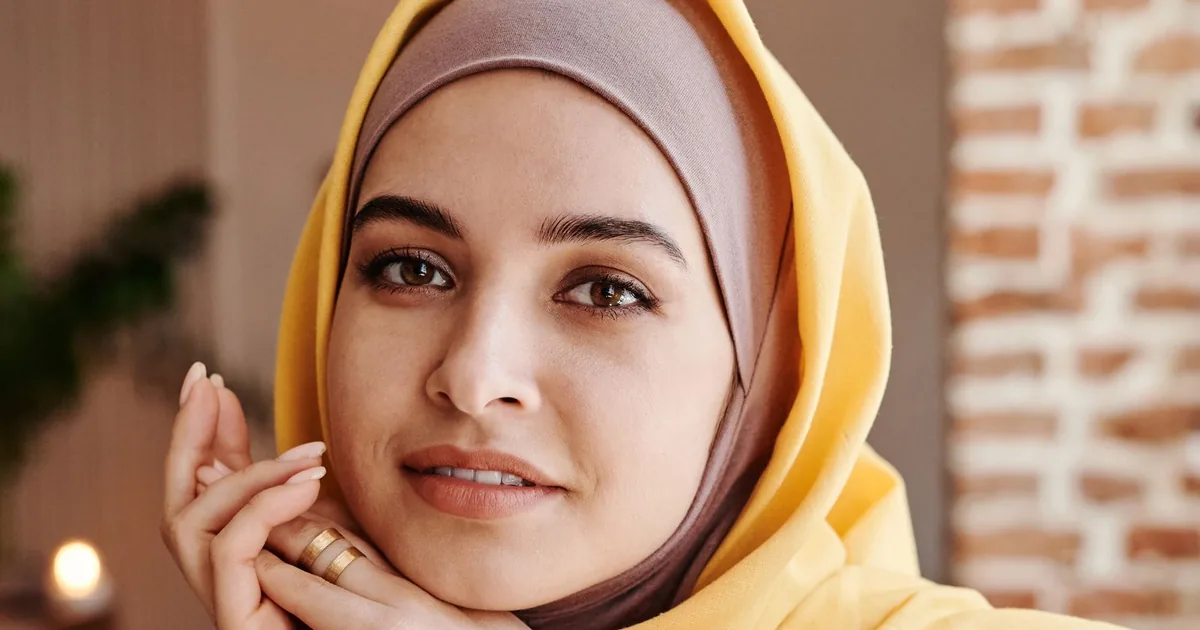
Coverage still needs a silhouette — fabric drape and one structured layer
Advertisement
People who dress modestly already know their line: wrist, ankle, hair, chest. The styling problem is what happens after that line is met. Two oversized knits, a clingy jersey, or a hijab that fights the face will score as unfinished the same way an uncovered outfit with those faults would. Coverage is the constraint. Proportion is still the job.
Body type does not disappear under an abaya or a long tunic. A pear still needs the waist marked on the outer layer or a hem that does not cling through the hip. An inverted triangle still needs volume below or a softer shoulder. Use the body type calculator, then apply those rules to the outer garment, not to a layer nobody sees.
The layering order that keeps a shape
Fitted base, then structure, then optional volume. Reverse that order and you get a sack. A close long-sleeve in a matte jersey or a fine knit gives you a clean sleeve and a neckline you control. Over it: a blazer, a longline vest, a belted coat, or a tailored abaya with a shoulder seam that actually sits on the shoulder. The third piece, if you need it for warmth or extra coverage, should be lighter than the middle one — a fine cardigan, not a second coat.
Mark the waist on the outer layer if you want an hourglass or a pear to still read as one. A belt over a tunic, a seam, or a closed coat that nips is enough. Do not belt a clingy dress and then cover it with an open shapeless cardigan; the belt disappears and the cardigan becomes the outfit.
Hems: check sit, bend, and stairs, not just the standing mirror. A midi that flashes when you sit is not modest in practice. A hem that pools is not modest either — it is a trip hazard and it reads as unaltered. Same rule as the petite guide: hem to the shoe you will wear.
Advertisement
Fabric: opaque, then drape
Hold it up to a window. If you can see the outline of your hand, it is not the outer layer. That test beats any "modest" hangtag. Once it is opaque, drape decides whether it looks like clothing or like upholstery. Crepe, viscose twill, merino, linen with a lining, and a good ponte hang. Stiff poly-cotton that stands away from the body in a box does not, even if it covers more.
Shine is a coverage leak in photographs. Satin that clings reads as skin even when it is not. Matte or a dull crepe is the safer outer. If you want shine, keep it to a shoe or a bag, away from the torso.
Heat is a real constraint, not an excuse for cling-film jersey. A loose linen with a slip, a breathable viscose, or a fine knit under a sleeveless outer (where your standard allows) will cover without cooking you. Two polyester layers in summer is why people give up on modest dressing in July.
Hijab: drape is face shape, colour is undertone
A hijab is a frame around the face, the same job glasses have. If you have not thought about that geometry, take the glasses quiz for the shape names, then apply them here. Triangle on that quiz means a wide jaw, not inverted triangle.
- Round face: lengthen. A longer front drape, a cleaner under-scarf edge, less bulk at the cheeks. Avoid a wide, horizontal wrap that adds width where you already have it.
- Oblong or long face: add a little side width or a softer volume at the ear, so the face does not look even longer. A tight pulled-back wrap emphasises length.
- Square jaw: soften with a rounded side and a fabric that falls, not a sharp folded edge sitting on the jawline.
- Heart (wide forehead, narrow chin): keep the top of the wrap light; do not add a heavy brow of fabric. A little fullness lower down balances the chin.
- Triangle (wide jaw): volume at the crown and a clean line at the jaw. Extra fabric sitting on the jaw adds weight exactly where you do not want it.
Fabric weight: jersey stays put and can cling at the cheek; chiffon needs an under-scarf and moves; crepe sits between. If the wrap slides when you talk, the under-scarf or the pin is wrong — same as a glasses bridge, not a reason to change your whole style.
Colour next to the face follows undertone, not "modest colours." Cream versus true white, gold versus silver, the same tests as the undertone test. A cool face in a warm camel hijab will look tired even if the drape is perfect. A printed hijab plus a printed dress is two statements; pick one.
Advertisement
Work, mosque, and the rest of the week
Match the room the way any other dress code does. A mosque or a conservative service wants opaque fabric, a hijab that stays when you bow, and jewellery that does not announce itself — closer to the church-service logic on OutfitScore than to a fashion editorial. Work smart-casual modest is a tailored trouser or a long skirt, a sleeve, a closed neckline, and a blazer; see smart casual for the definition, then add your coverage line on top.
Weekend modest is allowed to be denim. A long tunic over a straight jean, a hem that covers when you sit, sneakers that are clean. The miss is a bodycon top "because it is covered by an open abaya" that photographs as uncovered the moment the abaya blows back. If the outer layer is open, the inner layer has to meet the standard on its own.
What to stop doing
- Two loose layers of the same volume. One of them needs a shoulder or a belt.
- A hijab colour that fights your undertone because it "went with the outfit." Change the outfit.
- Heels you cannot walk in, used to "make the abaya look dressy." A leather flat under a clean hem looks more finished.
- Buying only black because it is easy. Black is a contrast choice; on some colouring it is harsh at the face. Ink, charcoal, olive and navy are still modest.
- Ignoring petite or tall. A modest hem on a petite that pools, or a tunic on a tall that becomes a shirt, is a length problem. Hem it.
Shape first, then the wrap
Find your body type for the outer layer, then your face shape for the hijab drape. Coverage stays yours.
Frequently Asked Questions
Does modest dressing have to be loose and dark?
No. Modest is a coverage rule, not a colour or volume rule. A defined shoulder, a visible waist over a layer, and a hem that clears the shoe will read as dressed, not as hiding. Dark is optional; muddy fabric with no drape is what reads as frump.
How do I keep a silhouette when everything is covered?
Layer with intention: a fitted base, then a structured piece (blazer, longline vest, belted coat) so the outline is a column or an A-line, not a sack. The waist can be marked on the outer layer. Avoid two loose layers of the same volume — that is how coverage becomes shapeless.
What hijab fabric and drape suit my face?
Match drape to face geometry the same way glasses do. A round face usually wants a longer, more vertical drape and a defined under-scarf edge. A long or oblong face wants some width at the side, not a tight pulled-back wrap. Square jaws soften with a rounded, slightly fuller side. Triangle here means a wide jaw — keep volume at the crown, not at the jaw.
Can I wear colour and print while dressing modestly?
Yes. Keep print scale to your frame and put the loudest colour away from a busy hijab, or the reverse: a quiet hijab with a printed skirt. Two competing prints at the face and the body is the miss, not colour itself. Undertone still decides which hues sit next to the face.
What should I wear to a mosque or a conservative event?
Match the room: opaque fabric, sleeves to the wrist if that is the expectation, a hem that covers when you sit and bend, and a hijab that stays put when you move. Quiet jewellery, no loud logos. This is closer to church-service logic than to a fashion rule — coverage first, then finish.
Is this a religious ruling?
No. This is styling for people who already have a coverage standard. Follow your own community, family and faith practice. OutfitScore does not issue fiqh or dress-code rulings.
About the Author: Saad Sellami
Saad is the Founder and Lead Data Analyst at OutfitScore. With a background in software engineering, he analyzes tens of thousands of AI fashion assessments to uncover data-driven insights into how we dress, color theory, and styling patterns. Read more about the OutfitScore mission