Men's Style Guide: 10 Pieces Every Man Needs in 2026
Great style isn't about having a huge wardrobe; it's about having the right pieces. These 10 essentials form the foundation of a timeless, versatile closet for any man.
Saad Sellami
Founder & Data Analyst, OutfitScore
Published: January 22, 2025
Reading time: 6 minutes
Quick Answer
Every man's wardrobe needs 10 essentials: white oxford shirt, navy chinos, dark jeans, grey crew-neck sweater, white t-shirt, leather belt, clean white sneakers, leather loafers or derbies, navy blazer, and a quality watch. These 10 pieces create over 40 outfit combinations and cover every dress code from casual to business formal.
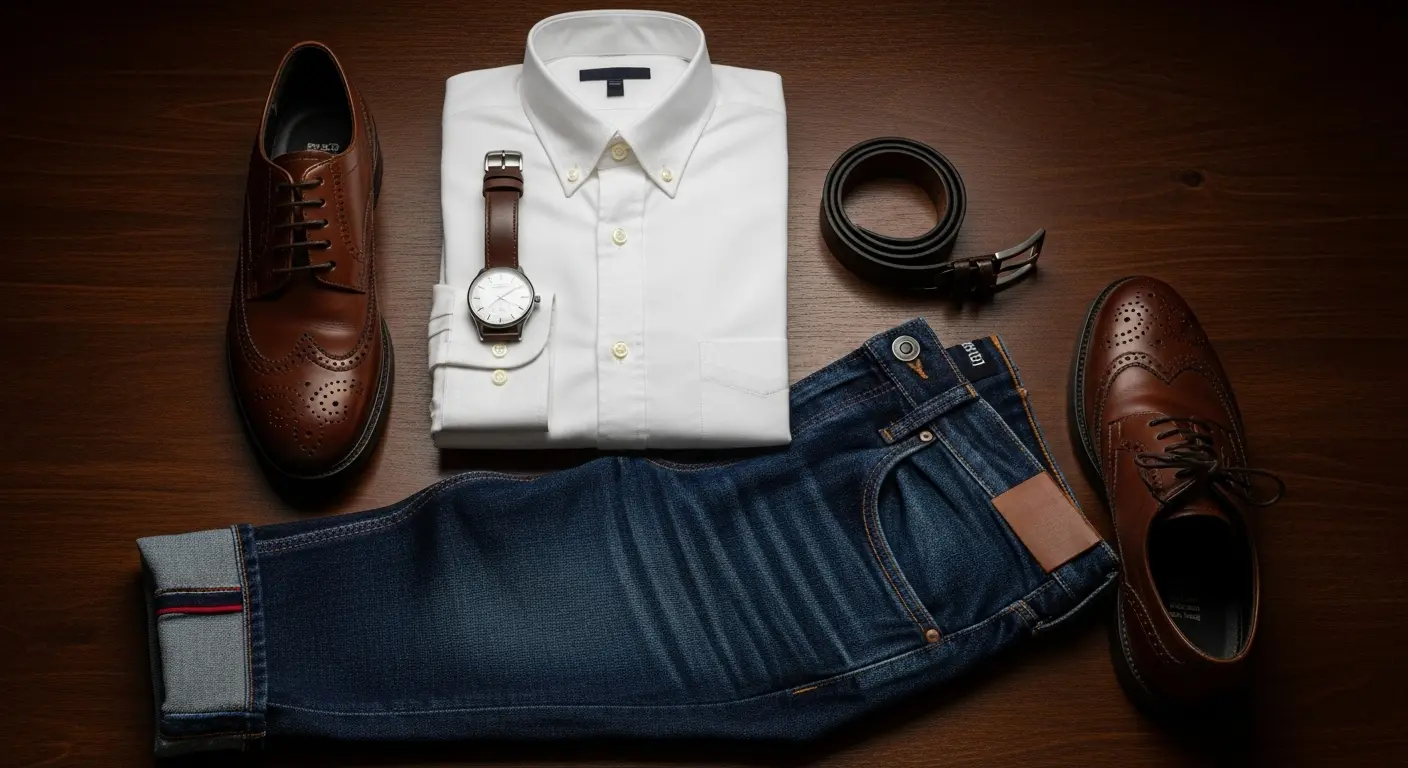
These 10 essentials are the building blocks of a great wardrobe.
Building a stylish wardrobe can feel overwhelming. Trends come and go, but certain classic pieces remain essential. By investing in these 10 items, you'll create a foundation that allows you to build countless outfits for any occasion, from a casual weekend to a business meeting.
The 10 Wardrobe Essentials
1. The Crisp White Oxford Shirt
The ultimate versatile shirt. It can be dressed up with a blazer or dressed down with rolled sleeves and chinos. Look for a slim-fit, 100% cotton shirt for the best look and feel.
2. Dark-Wash Selvedge Denim
A pair of high-quality, dark-wash jeans is a non-negotiable. They are appropriate for almost any situation outside of formal events. A straight or slim fit is the most timeless choice.
3. The Perfect White T-Shirt
The foundation of any casual look. A well-fitting, high-quality white crewneck t-shirt can be worn on its own or as a layering piece under a jacket or an open shirt.
4. A Navy Blazer or Sport Coat
Instantly elevates any outfit. A single-breasted, two-button navy blazer in wool or a cotton blend is a classic that will never go out of style.
5. Quality Leather Brogues or Loafers
A pair of well-made brown or black leather shoes can anchor any outfit. Brogues are perfect for business casual, while loafers offer a more relaxed yet sophisticated vibe.
6. Classic White Leather Sneakers
Minimalist white sneakers have replaced dress shoes in many modern office settings. They pair perfectly with everything from jeans to tailored trousers.
7. A Versatile Crewneck Sweater
A simple sweater in a neutral color like gray, navy, or charcoal is a layering hero. Choose natural fibers like merino wool or cashmere for the best quality.
8. Well-Fitted Chinos
More formal than jeans but more relaxed than dress pants. A pair in stone or navy offers incredible versatility for business casual and weekend wear.
9. A Timeless Watch
A classic watch is more than a timepiece; it's a statement of personal style. A simple design with a leather or metal strap is a worthwhile investment.
10. A Quality Leather Belt
The detail that pulls an outfit together. Every man needs at least two: one black and one brown, with simple, classic buckles to match your shoes.
Six men's style outfits the AI has already scored
Each combination below uses only the 10 essentials listed above. The AI scores fit, proportion, and colour coordination, so the same core pieces land very differently depending on what they are paired with.
White oxford shirt, navy chinos, brown loafers, leather belt
87/100A textbook business-casual formula: two neutrals, matching leathers, and clean lines the AI has nothing to correct.
Navy blazer, white oxford, dark selvedge denim, brown brogues
84/100Smart-casual done with restraint. The blazer sharpens the jeans while the brogues keep the look grounded.
White t-shirt, dark selvedge denim, white sneakers, watch
82/100The minimal casual baseline. Dark denim and clean sneakers carry it, and the watch adds a deliberate finishing detail.
Grey merino crewneck, navy chinos, white sneakers
77/100The layering hero at work. It scores well but lacks a leather accent, which is why it sits below the loafer and brogue outfits.
Navy blazer, joggers, running shoes
59/100The blazer sets a formal expectation that the joggers and running shoes break, so cohesion and occasion scores both collapse.
Graphic t-shirt, distressed jeans, slide sandals
56/100Three casual pieces that never agree. The AI reads the graphic, the distressing, and the slides as competing rather than coordinated.
Unsure How to Style These Essentials?
Upload a mirror selfie of your outfit using these key pieces and let OutfitScore's AI check your fit, proportions, and color coordination.
Score My Outfit (Free)Fit Checkpoints: Shoulders, Chest, Sleeve, and Hem
The same 10 pieces can look expensive or borrowed depending on fit. Before you buy or tailor anything, run through four checkpoints in front of a mirror. They take thirty seconds and prevent the most common menswear mistake, which is buying for the label rather than the fit.
Shoulders come first and cannot be tailored
On a shirt or blazer, the shoulder seam should sit exactly at the edge of your shoulder bone, no further. If it droops past the bone the garment is too big, and if the fabric pulls before the seam it is too small. A tailor can adjust the waist, sleeves, and hem of a jacket, but rebuilding shoulders is expensive and rarely worth it, so get this one right at the rack.
Chest and torso
Button the shirt or jacket and slide a flat hand under the closure over your chest. It should fit with light resistance. An X-shaped pull radiating from the button signals too tight; a fist's worth of slack means too loose. On a dress shirt, the hem should reach roughly the middle of your fly so it stays tucked when you raise your arms.
Sleeve length
Shirt sleeves end at the wrist bone, just before the base of the thumb, and should show about half an inch of cuff beyond a jacket sleeve. Jacket sleeves end at that same wrist bone, revealing the sliver of shirt. Sleeves that cover half the hand shorten your arms visually; sleeves that stop mid-forearm look like a garment you have outgrown.
Trouser break
The hem of your trousers should rest on the shoe with one slight crease, or none at all for a cleaner line. Extra fabric pooling around the ankle breaks the vertical line and makes even good chinos look sloppy. Have long trousers hemmed rather than cuffing them into a thick roll, which reads as an afterthought next to a blazer.
Shoe Care, Colour Pairings, and Occasion Mapping
Fit and care decide whether the essentials look intentional. Shoes take the most abuse and give away quality faster than any other item, and colour is the fastest way to make a simple combination look deliberate.
Rest leather shoes between wears
Insert cedar shoe trees within an hour of taking leather shoes off, while the leather is still warm, so they hold their shape and absorb moisture. Rotate shoes and give each pair at least 24 hours before the next wear; this roughly doubles the life of a sole. Brush off dust after every wear, condition the leather every six to eight wears, and polish to restore colour. White sneakers need the opposite routine: a soft brush and mild soap, never the washing machine, which deforms the sole and yellows the upper.
Build every outfit from two neutrals plus one accent
Start with two neutrals, such as navy and white, or gray and stone, then add one accent, such as a brown belt and shoes or an olive accessory. Keep leathers consistent: brown belt with brown shoes in daylight tones, black belt with black shoes after dark. Belts and shoes do not have to match perfectly, but they should share the same family, because a black belt against brown shoes is the clash most people notice without being able to name.
Map the 10 pieces to every dress code
- Weekend casual: white t-shirt, dark jeans, white sneakers.
- Business casual: white oxford, chinos, loafers or brogues, belt.
- Smart casual: navy blazer over the oxford with dark jeans or chinos and leather shoes.
- Business formal: add a tailored suit and keep the leathers in one family; the watch and belt carry the polish.
Mapping outfits to occasions before you dress is what stops the "nothing to wear" feeling. With 10 well-fitted essentials, every scenario above is a two-minute decision rather than a panic.
Frequently Asked Questions
What are the 10 essentials every man should own?
A crisp white oxford shirt, dark-wash selvedge denim, a perfect white t-shirt, a navy blazer, quality leather brogues or loafers, classic white leather sneakers, a versatile crewneck sweater, well-fitted chinos, a timeless watch, and a quality leather belt.
How many outfits can 10 essentials create?
These 10 pieces create over 40 outfit combinations and cover every dress code from casual to business formal, which is why they form the foundation of a versatile wardrobe.
What shoes should every man own?
Two pairs do most of the work: minimalist white leather sneakers for casual and modern office wear, and well-made brown or black leather brogues or loafers to anchor business-casual and smarter outfits.
How do I match my belt to my shoes?
Own at least two leather belts - one black and one brown - with simple, classic buckles, and match each belt to the leather of your shoes. Consistent leathers make an outfit read as deliberate.
What is the most versatile shirt a man can own?
The crisp white oxford shirt. It dresses up with a blazer and down with rolled sleeves and chinos, which is why it leads the list of men's style essentials.