Summer vs Winter Color Palettes: How Your Colors Change by Season
Ever notice how the same red sweater looks radiant on you in November but washes you out in July? It's not your imagination - seasonal color theory explains why certain colors work in one season and fail in another. Here's the complete guide to dressing for every season's palette.
By Saad Sellami
Founder, OutfitScore
Published: September 1, 2025
Reading time: 7 minutes
Quick Answer
Seasonal color theory works on two axes: warm vs cool (undertone) and bright vs muted (saturation). Spring = warm + bright, Summer = cool + muted, Autumn = warm + muted, Winter = cool + bright. Your personal season doesn't change, but the colors you draw from it shift with the actual seasons: lighter fabrics and tints in warm months, deeper tones and heavier textures in cool months.
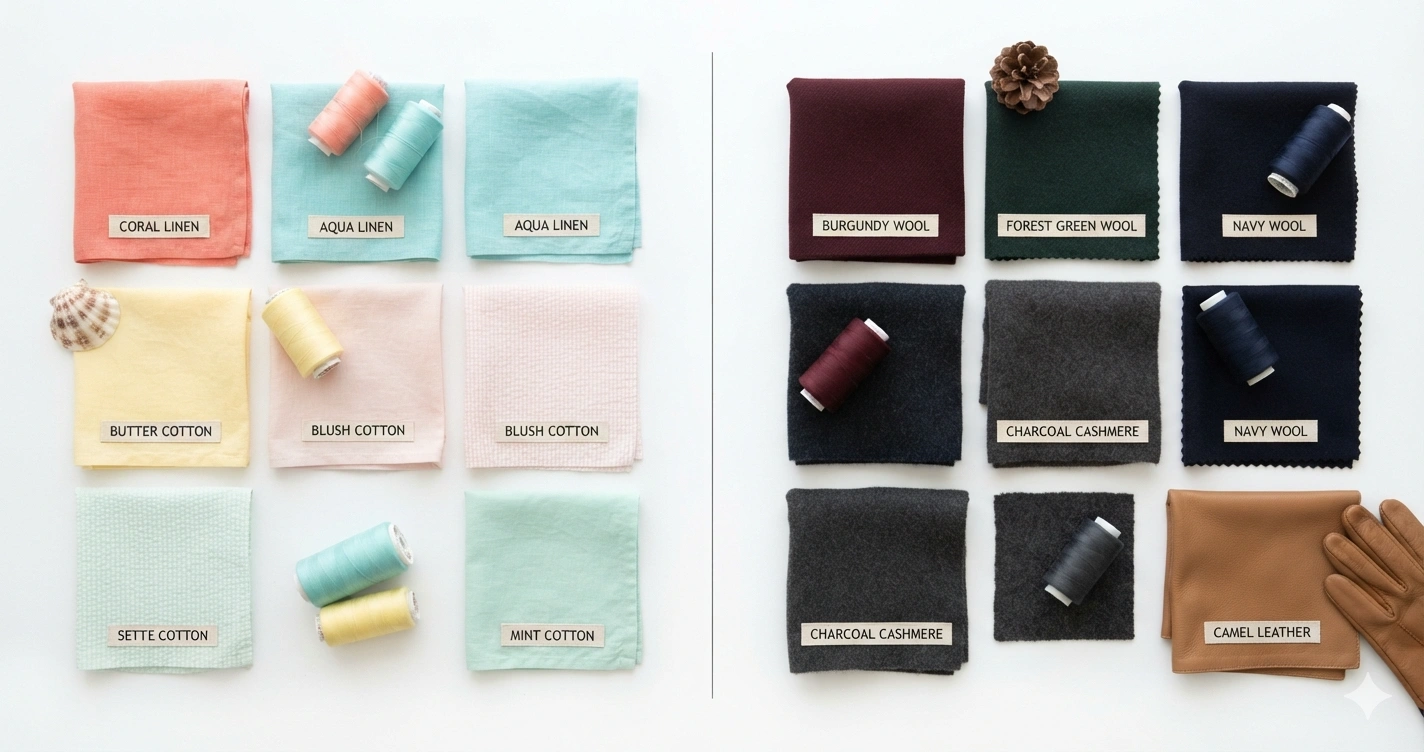
Your personal season stays constant - but which colors you pull from it changes dramatically
Seasonal color analysis has roots in color theory that dates back to Johann Wolfgang von Goethe's work in 1810, but it was popularized in the 1980s by Carole Jackson's book "Color Me Beautiful." The core insight hasn't changed: every person has a natural color palette - based on their skin undertone, hair color, and eye color - that determines which colors make them look vibrant versus washed out.
But there's a second layer most people miss: within your personal palette, which specific colors you wear should shift with the actual season outside. A "winter" person doesn't only wear winter colors in winter - they adjust the depth and texture of their palette as the calendar changes.
Your 4-Season Color Guide
First, determine your season. If you don't know it, look at the veins on your wrist in natural light: blue/purple veins suggest cool undertones (Summer or Winter), green veins suggest warm undertones (Spring or Autumn). Then consider whether high-contrast colors (bright jewel tones) or muted colors (dusty pastels) make you look more alive.
Spring (Warm + Bright)
Your best colors: Coral, peach, warm yellow, grass green, turquoise, camel, ivory (not stark white), light warm beige
Avoid: Black, stark white, cool blues, icy pastels, gray
Celebrity example: Emma Stone, Taylor Swift, Cameron Diaz
Summer (Cool + Muted)
Your best colors: Soft white, rose pink, lavender, powder blue, sage green, dusty mauve, soft navy, charcoal gray
Avoid: Orange, yellow, bright red, warm brown, gold-toned anything
Celebrity example: Kate Middleton, Emily Blunt, Sarah Jessica Parker
Autumn (Warm + Muted)
Your best colors: Rust, olive green, mustard yellow, burnt orange, chocolate brown, cream, deep teal, burgundy
Avoid: Black, bright white, cool pink, icy blue, bright jewel tones
Celebrity example: Julia Roberts, Jennifer Lopez, Julianne Moore
Winter (Cool + Bright)
Your best colors: True black, stark white, ruby red, emerald green, royal blue, fuchsia, silver, icy pastels
Avoid: Beige, orange, warm brown, mustard, gold, muted earthy tones
Celebrity example: Anne Hathaway, Lupita Nyong'o, Zooey Deschanel
Not sure which season you are? Most people are a blend of two categories (e.g., "Soft Summer" or "Deep Autumn"). The 12-season system refines these four into more precise sub-seasons, but the four-season framework is enough for building a wardrobe that makes you look alive rather than tired.
How Actual Seasons Change Your Palette
Having a personal season is useful, but it's only half the story. Wearing the same "winter person" color palette in July feels visually jarring because the natural light and the environment have shifted. Here's how each personal season should adapt:
| Your Season | Summer Palette Shift | Winter Palette Shift | Best Summer Fabric | Best Winter Fabric |
|---|---|---|---|---|
| Spring | Lighter tints: coral → peach, turquoise → aqua, camel → cream | Deeper versions: coral → rust, yellow → mustard, green → olive | Cotton poplin, linen, seersucker | Corduroy, brushed cotton, cashmere |
| Summer | Even softer: lavender → lilac, powder blue → sky blue, dusty pink → blush | Slightly deeper: soft navy → deep navy, dusty mauve → plum, gray → charcoal | Linen, chambray, cotton voile | Merino wool, velvet, silk charmeuse |
| Autumn | Warm tints: rust → terra cotta, olive → sage, mustard → goldenrod | Richer depth: rust → deep auburn, olive → forest green, burgundy → oxblood | Linen, cotton gauze, raw silk | Tweed, suede, heavy wool, shearling |
| Winter | Bright versions: royal blue → cobalt, fuchsia → hot pink, red → poppy | Jewel tones at full saturation: emerald, ruby, sapphire, amethyst | Cotton sateen, silk, crisp poplin | Leather, heavy silk, satin, wool crepe |
Transition Pieces That Bridge Seasons
The trickiest months are March-April and September-October, when the weather doesn't match either summer or winter. These pieces work across seasons by adjusting with the rest of your outfit:
The Camel Trench Coat
Works for every personal season because camel (warm beige) is universally flattering. Springs and Autumns wear it naturally. Summers pair it with cool blush or powder blue underneath. Winters pair it with a black or stark white base to maintain contrast. The coat bridges the gap visually and functionally.
White or Cream Wide-Leg Trousers
In summer, wear with sandals and a pastel top. In winter, swap to boots and a heavy knit in your season's deep winter shade. The trousers stay the same - the surrounding pieces do the seasonal work. Springs and Autumns choose cream; Summers and Winters choose true white.
The Denim Jacket
Denim is a universal neutral that works across all color seasons. Layer over summer dresses in July, layer under wool coats in December. Choose your wash based on your season: light wash for Springs and Summers, dark or black wash for Autumns and Winters.
A Silk Scarf in Your Season's "Bridge Color"
Every season has a color that works equally well in light summer fabrics and deep winter textures. Spring = turquoise, Summer = dusty mauve, Autumn = deep teal, Winter = true red. A silk scarf in this color tied at your neck, bag, or wrist lets you pull your seasonal palette into any outfit.
How Accessories Change Your Palette
The cheapest way to shift your palette from summer to winter without buying new clothes: change your accessories. A single accessory in a seasonal color can pull an entire outfit into the right tone.
Summer Accessory Swaps
- Shoes: Switch from black boots to nude or metallic sandals. Metallic (gold for warm seasons, silver for cool) acts as a neutral in summer.
- Bags: Swap dark leather for straw, raffia, or canvas in a light neutral. Colorful canvas totes (in your season's summer tint) replace black work bags.
- Jewelry: Lighter, brighter pieces. Gold tends to feel heavier in summer - try rose gold or mixed metals. Pearls and shells read as summery regardless of your season.
- Scarves: Switch from wool to silk or cotton in a lighter tint of your season's best color.
Winter Accessory Swaps
- Shoes: Dark leather boots, patent leather pumps, oxfords in deep tones replace summer sandals. Texture matters: suede feels winter-weight, patent feels holiday.
- Bags: Structured leather in your season's deepest shade. Black, oxblood, forest green, deep navy. Size up slightly - smaller bags read as summery, larger structured bags read as winter.
- Jewelry: Heavier, more substantial pieces. Chunky gold hoops, statement silver necklaces, layered chains. Delicate jewelry gets lost against chunky winter knits.
- Scarves: Cashmere or wool in your season's deepest saturated color. A winter person's true red scarf over a black coat is the ultimate power move.
Quick Color Palette Cheat Sheet
Hang this in your closet. When you're between seasons, consult the chart for your personal season:
Spring
Summer: Peach, aqua, cream, butter yellow
Winter: Rust, mustard, warm olive, camel
Summer
Summer: Lilac, sky blue, blush, soft white
Winter: Plum, deep navy, charcoal, icy blue
Autumn
Summer: Terra cotta, sage, goldenrod, cream
Winter: Oxblood, forest green, deep teal, chocolate
Winter
Summer: Cobalt, hot pink, poppy, icy white
Winter: Ruby, emerald, sapphire, true black
Discover Your Exact Color Season
Stop guessing which colors make you glow. Upload a photo to our free AI color analysis tool and get your personal season, best 10 colors, and which shades to avoid - all in under 10 seconds.
Find My Color Season FreeAbout the Author: Saad Sellami
Saad is the Founder and Lead Data Analyst at OutfitScore. With a background in software engineering, he analyzes tens of thousands of AI fashion assessments to uncover data-driven insights into how we dress, color theory, and styling patterns. Read more about the OutfitScore mission