The French Tuck: The #1 Quick Win Across Thousands of AI Outfit Analyses
No other single styling move appears more often in AI outfit improvement tips. Not adding a jacket, not changing your shoes, not buying anything new. The French tuck — tucking just the front of your shirt into your waistband — outranks everything else for score impact. Here's why, and exactly how to do it.
Disclosure: Some links in this article are affiliate links. As an Amazon Associate, OutfitScore earns from qualifying purchases, at no extra cost to you.
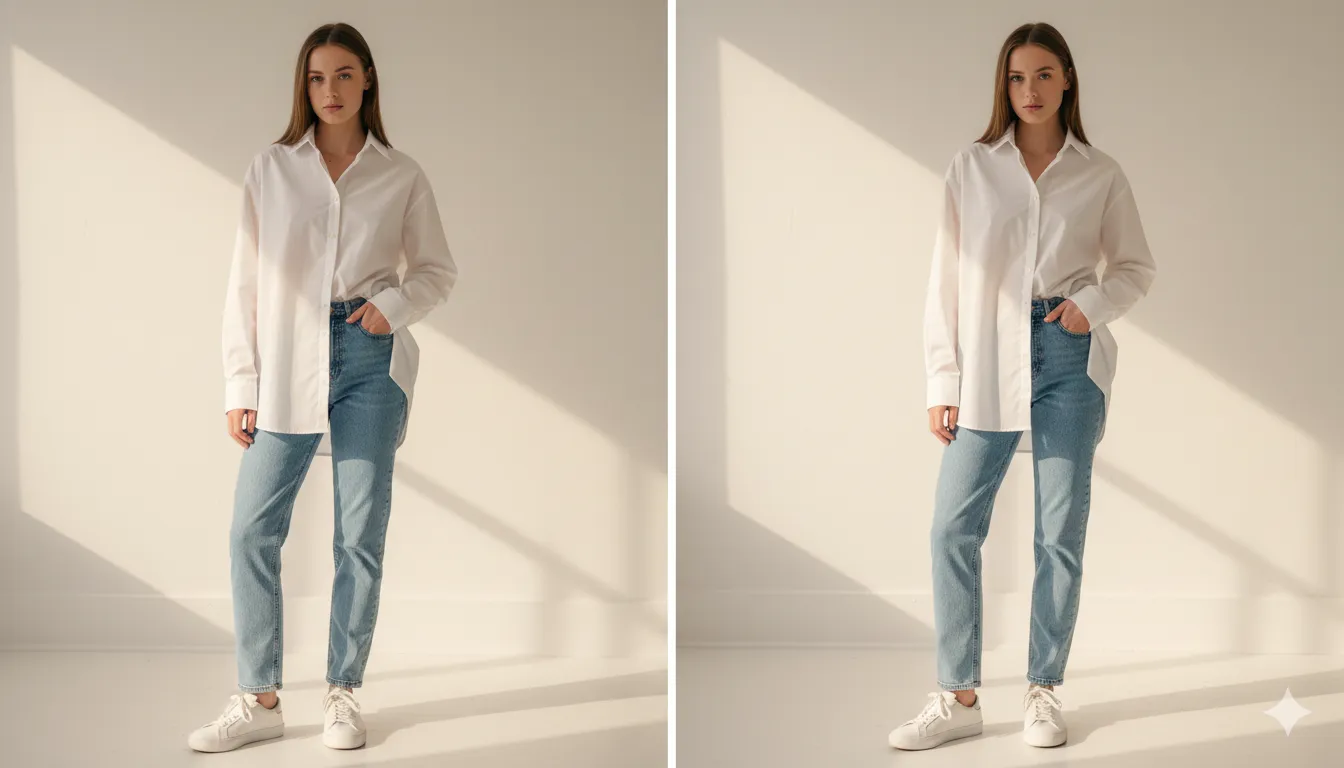
Same shirt, same jeans, same shoes. The only difference is a four-inch tuck at the front — and about 8 outfit score points.
Advertisement
When AI analyses a photo of your outfit, fit and proportion is the second-most important dimension — averaging 11.7 out of 20, and responsible for a significant chunk of your overall score. The most common reason this score stays low isn't wrong sizing or bad fabric. It's a shapeless silhouette — usually caused by an untucked shirt creating a rectangular, undefined form.
The French tuck fixes this in ten seconds. It creates the visual impression of a waist without restricting movement, without requiring a belt, and without changing any actual garment. It works on t-shirts, button-downs, blouses, knits, and polo shirts. It works across all body types. And it costs nothing.
The reason it appears so frequently in AI analysis is simple: it's the fastest route from a shapeless 58 to a proportioned 68. No other single change achieves the same score delta for zero cost.
Advertisement
What the AI Actually Sees
AI outfit scoring evaluates proportion by looking at the relationship between your top and bottom half. When a shirt is fully untucked, the visual weight of the outfit sits in the middle of the body — there's no clear waist marker, no upper-to-lower transition, and no intentional silhouette shape. The AI reads this as "shapeless" and reduces the fit and proportion score accordingly.
Direct AI verdict on untucked outfits
"The oversized silhouette lacks intentional structure, resulting in a sloppy, shapeless appearance."
"The outfit lacks layering depth, appearing as a collection of random basics rather than a curated look."
— Actual AI feedback from outfit analyses in the dataset
A French tuck changes this immediately. The front tuck creates a clear waist-level anchor point. The eye now travels from the top of the body to the waist and then to the lower half in a deliberate sequence. The outfit reads as composed, not accidental.
How to Do a French Tuck (Step by Step)
The French tuck takes about 10 seconds once you know the motion. The key is pinching only the front centre — not the sides.
Pull the shirt fully out first
If anything is already tucked, release it. You need the fabric completely loose to get the correct amount of volume in the finished tuck.
Pinch only the front centre
Use your thumb and index finger to grab roughly 4–6 inches of fabric at the very front of the shirt — at the centreline. Do not grab the sides. The sides stay out.
Create a small fabric poof
Pull the tucked section slightly back out until there's a gentle billowing shape at the front. The tuck should look relaxed, not flat and strained. This is what makes it look effortless rather than forced.
Check the side seams
The side seams of the shirt should hang straight down from your shoulders. If they're pulling forward, you've tucked too much. Release a little.
When the French Tuck Works (and When It Doesn't)
✓ Works well with
- • Plain or striped t-shirts
- • Button-down shirts (open or closed)
- • Lightweight blouses and tunics
- • Polo shirts
- • Lightweight sweaters and knit tops
- • High-waist jeans and trousers
- • A-line and midi skirts
✗ Works less well with
- • Very thick or heavy knit sweaters
- • Structured blazers or tailored jackets
- • Extremely cropped tops (nothing to tuck)
- • Low-rise bottoms (the tuck shows too much skin)
- • Heavily embellished or beaded tops
- • Oversized hoodies (too much bulk)
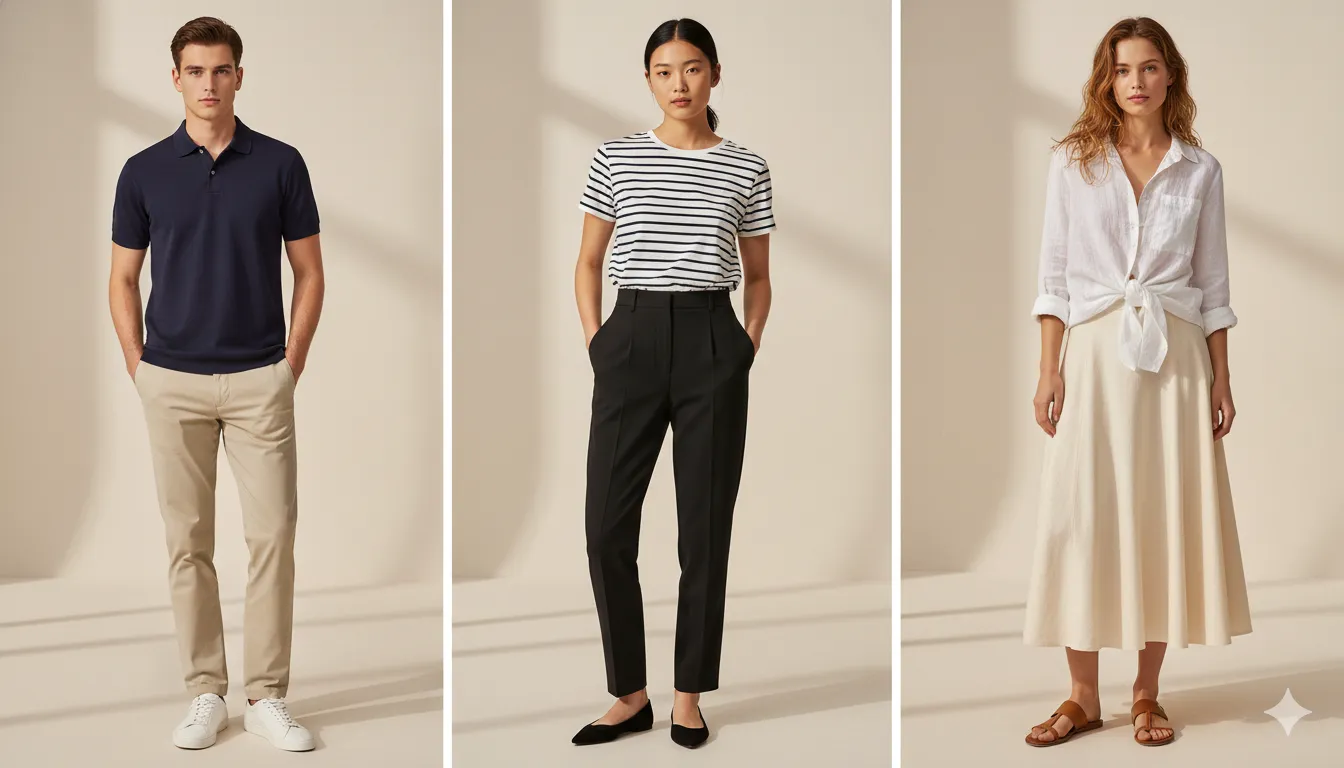
The French tuck works across multiple outfit types — from casual polo to smart linen shirt — because it's a proportion fix, not a style statement.
The French Tuck vs the Full Tuck
You might be wondering: if a French tuck is good, is a full tuck better? Not always. A full tuck signals formality — it's appropriate for office, formal, and business-casual settings where the complete waistband should be visible. But for everyday casual wear, a full tuck can look overdressed or stiff. The French tuck lives in the sweet spot: it defines the waist and signals intentionality without making the outfit feel like a work meeting.
AI analysis reflects this nuance. For everyday and streetwear outfits, the quick win is almost always the French tuck or partial tuck. For smart-casual or office outfits, AI tips lean toward a full tuck with a belt. For casual weekend looks, the French tuck scores highest for the occasion-appropriateness dimension.
See what your outfit score looks like after the tuck
Try the French tuck, take a photo, and get your AI outfit score — free. See the before-and-after in your own numbers.
Rate My Outfit Free →Frequently Asked Questions
What is a French tuck?
A French tuck (also called a half tuck or partial tuck) is a technique where only the front-centre section of a shirt is tucked into the waistband, while the sides and back hang loose. It creates the appearance of a defined waist without the formality of a full tuck.
Does the French tuck work on all body types?
Yes. For apple and rectangle body types it creates definition that isn't naturally visible. For hourglass and pear body types it reinforces the natural silhouette. The French tuck works because it's a visual anchor point, not a constricting technique.
How much does a French tuck improve your outfit score?
The main sub-score it affects is fit and proportion, which averages 11.7/20 across thousands of AI analyses. Correcting a shapeless silhouette through a French tuck can add 4–8 points to the overall score, depending on the outfit.
Is the French tuck the same as a half tuck?
Yes — French tuck, half tuck, partial tuck, and front tuck all refer to the same technique. The AI uses all these terms interchangeably in outfit improvement tips.
About the Author: Saad Sellami
Saad is the Founder and Lead Data Analyst at OutfitScore. With a background in software engineering, he analyzes tens of thousands of AI fashion assessments to uncover data-driven insights into how we dress, color theory, and styling patterns. Read more about the OutfitScore mission →